


Why Mulching Is One of the Best Investments You Can Make for Your DFW Landscape
Mulch Does More Than Most DFW Homeowners Realize
If you think of mulch as purely a cosmetic choice — something to make your flower beds look neat — you're leaving most of its value on the table. Mulch is one of the hardest-working elements in a landscape. Applied correctly, it regulates soil temperature, retains moisture, suppresses weed growth, improves soil structure as it decomposes, and protects the root systems of your trees and shrubs. For homeowners in Fort Worth, Dallas, and across the DFW Metroplex — where summer heat is intense and clay soil is unforgiving — those functions are genuinely meaningful.
At Gonzalez Landscaping, mulching is a service we perform across residential and commercial properties throughout Fort Worth, Arlington, Colleyville, Southlake, Bedford, North Richland Hills, Saginaw, Benbrook, and the broader DFW area. This guide covers everything homeowners need to know about choosing the right mulch, applying it correctly, and making the most of this often underestimated landscape investment.
How Mulch Benefits DFW Landscapes
Soil Temperature Regulation
DFW summer soil temperatures without mulch coverage can exceed 120 degrees Fahrenheit on the surface — hot enough to damage root systems of even heat-tolerant plants. A 2 to 3 inch layer of mulch insulates the soil, keeping root zones significantly cooler during summer and warmer during the brief North Texas cold snaps in winter.
Moisture Retention
DFW's combination of clay soil and hot summers creates challenging conditions for plant water management. Clay soil drains slowly but also dries and cracks on the surface rapidly during dry stretches. Mulch dramatically reduces evaporation from the soil surface — reducing the watering frequency needed to keep plant root zones adequately hydrated. In water-restricted periods, this function alone justifies the cost of mulch installation.
Weed Suppression
Mulch blocks sunlight from reaching the soil surface, preventing the germination of most annual weed seeds. A properly installed mulch layer of 2 to 3 inches provides significant weed suppression across landscape beds. Combined with a pre-emergent herbicide application beneath the mulch, weed pressure in mulched beds can be reduced by 70 to 90 percent compared to unmulched beds.
Soil Health Improvement
Organic mulches — wood chips, shredded hardwood, cedar — break down slowly over time, adding organic matter to the soil beneath them. For DFW clay soil, which is notoriously low in organic content, this slow decomposition improves soil structure, drainage, and the biological activity that supports healthy plant growth.
Root Protection
Tree root systems are particularly vulnerable to compaction, temperature extremes, and moisture stress. Mulching the area beneath a tree's canopy — ideally 3 to 4 feet out from the trunk in all directions — provides consistent protection to the root zone. For newly planted trees and shrubs in DFW landscapes, mulching is one of the highest-impact things a homeowner can do to support successful establishment.
Choosing the Right Mulch for Your DFW Landscape
Not all mulches perform equally, and the right choice depends on the application and the aesthetic goals of your property.
Shredded Hardwood Mulch
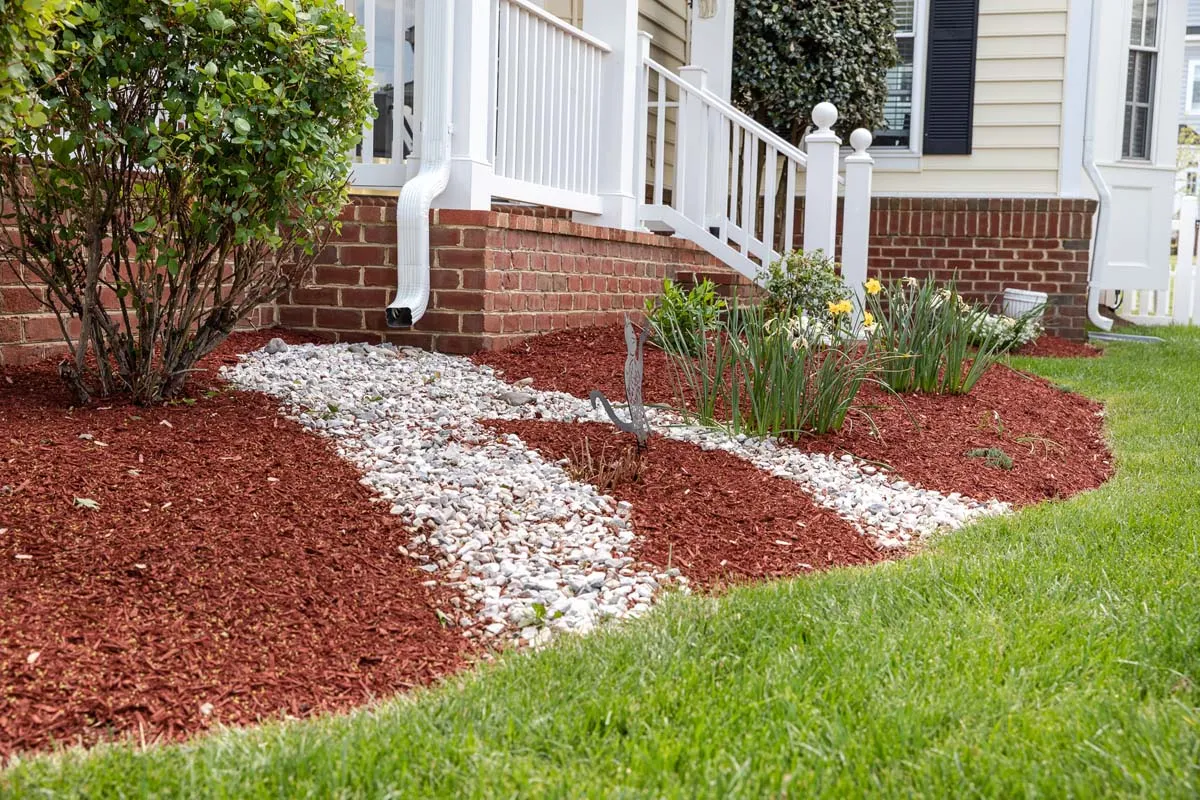
The most popular mulch type in DFW residential landscapes. Shredded hardwood locks together well, resists displacement during rain events, decomposes at a moderate rate, and provides excellent moisture retention. It's available in natural or dyed varieties (brown, black, red) to match landscape design preferences.
Cedar Mulch
Cedar's natural oils provide additional insect-repellent properties alongside standard mulch benefits. It's a popular choice for properties with significant ant activity or homeowners who want to reduce insect pressure near foundation plantings.
Pine Bark Mulch
Pine bark mulch is an excellent choice for acid-loving plants (azaleas, gardenias, some ornamental trees) as it lowers soil pH slightly as it decomposes. It's also visually attractive and breaks down more slowly than shredded hardwood.
River Rock and Gravel Mulch
For areas where organic mulch would decompose too quickly — direct sun areas with intense heat exposure, drainage channels, or around foundation plantings that need excellent drainage — river rock and decorative gravel provide lasting coverage without the maintenance of organic mulch replacement.
Rubber Mulch
Made from recycled tires, rubber mulch is long-lasting and commonly used in playground areas and high-traffic zones. It doesn't compress or decompose, but it doesn't offer the soil health benefits of organic mulch and can heat up significantly in DFW summer sun.
How to Apply Mulch Correctly
Getting the depth right is critical. Both under-mulching and over-mulching cause problems:
The Right Depth
Two to three inches is the ideal mulch depth for most DFW landscape beds. Less than two inches provides insufficient weed suppression and temperature regulation. More than four inches can prevent water infiltration and, around tree trunks, create conditions for trunk rot and pest habitat.
Keep Mulch Away from Tree Trunks
One of the most common mulching mistakes we correct at Gonzalez Landscaping is "mulch volcanoes" — mulch piled up against tree trunks in a cone shape. This practice traps moisture against the bark, promotes fungal disease, and can girdle the tree over time. Mulch should be pulled back 2 to 4 inches from the base of any tree or shrub.
Edge Your Beds Before Mulching
A fresh layer of mulch looks dramatically better — and performs better — when installed in a well-edged bed. Clean, defined edges keep mulch contained and give the entire landscape a polished, intentional appearance.
Remove Old Mulch When Excessive Depth Has Accumulated
Over multiple years of mulch application, depth can accumulate past the point of benefit. When existing mulch depth already exceeds 3 inches, old material should be removed or redistributed before fresh mulch is installed.
How Often Should DFW Homeowners Refresh Their Mulch?
For most DFW landscapes, annual mulch refreshing — typically in spring before the growing season begins — keeps beds looking clean and maintains the functional benefits of mulch coverage. In high-sun areas where mulch fades and decomposes faster, a mid-season refresh in late summer or fall can extend the visual appeal through the fall season.

A healthier, better-looking landscape starts with what's beneath the surface. Gonzalez Landscaping is ready to make mulching work for your property.

Find Us On


